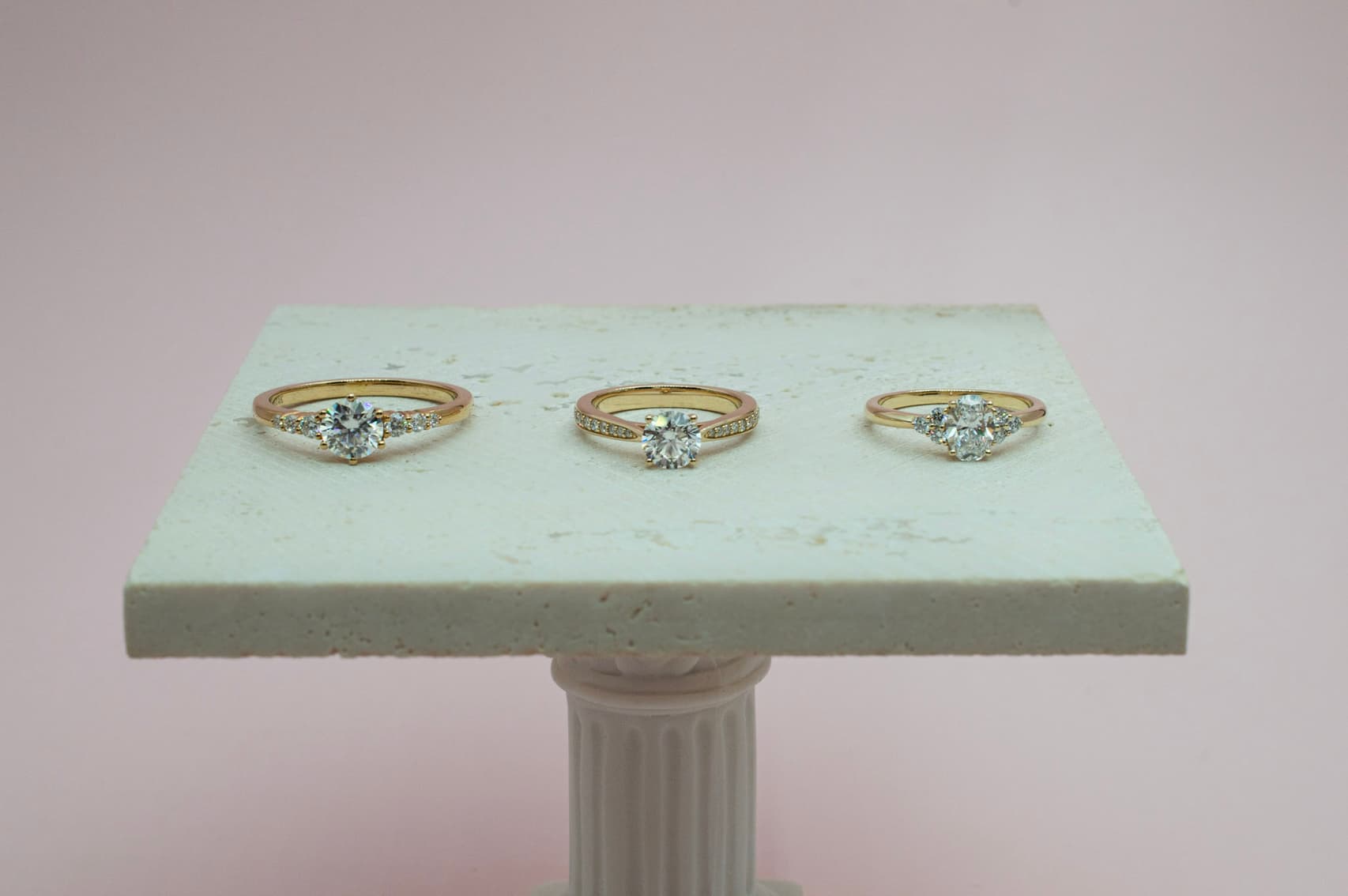
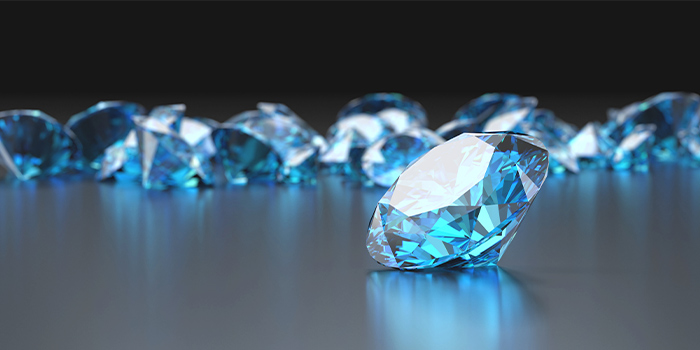
A round brilliant cut diamond engagement ring remains one of the most studied and purchased diamond styles in the jewelry market. It combines symmetry, proportion, and light performance to create consistent brilliance. Buyers often compare natural diamonds with newer alternatives like lab grown diamonds and man made diamonds before making a final decision.
This guide explains how the cut works, how pricing forms, and how shape choices affect cost and appearance. It also covers modern purchasing trends that influence engagement ring decisions today.
What defines a round brilliant cut diamond engagement ring
A round brilliant cut diamond engagement ring features a diamond shaped with 57 or 58 facets designed for maximum light return. The cut follows precise mathematical proportions that control how light enters, reflects, and exits the stone.
This cut became standardized in the early 20th century after advancements in gemological research. Marcel Tolkowsky’s light performance model influenced modern proportions. Jewelers still rely on these proportions to evaluate brilliance and fire.
Round brilliant diamonds focus on light return, while fancy shapes emphasise shape variation. This makes them the most consistent option for sparkle across different carat sizes. If you’re looking to buy lab grown diamonds, these are an excellent choice.
The cut works well in most settings, including solitaire, halo, and three stone designs. Its symmetry also simplifies pairing with wedding bands.
Round brilliant cut diamond engagement ring pricing and value factors
Pricing for a round brilliant cut diamond engagement ring depends on several measurable characteristics known as the 4Cs: cut, color, clarity, and carat weight.
Cut quality often has the strongest influence on value. A well-cut diamond reflects more light, which increases perceived brilliance even at smaller carat sizes.
Carat weight increases price exponentially rather than linearly. A 1.5 carat diamond can cost significantly more per carat than a 1.0 carat stone due to rarity.
Color grading also affects pricing. Near-colorless grades like G to H often balance appearance and cost for many buyers.
Clarity plays a smaller but still important role. Stones with minor inclusions visible only under magnification often offer better value.
Market conditions also affect pricing. Certification from labs such as GIA or IGI provides consistency in grading standards, which helps stabilize valuation.
Diamond shapes by price and how round brilliant compares
Understanding diamond shapes by price helps buyers evaluate value beyond carat weight. Different shapes distribute weight differently, which affects both cost and appearance.
Round brilliant diamonds usually rank as the most expensive shape per carat. This happens because cutting rough diamonds into round shapes produces more waste compared to elongated or modified shapes.
Shapes like oval, pear, and marquise often appear larger for the same carat weight. They use more of the rough diamond, which improves cost efficiency.
Princess cuts typically offer a balance between sparkle and cost. Emerald cuts often cost less per carat but show inclusions more easily due to their step cut structure.
Cushion cuts vary widely in price depending on facet style and depth. Some cushion cuts retain more weight, which can lower cost compared to round brilliants.
Round brilliant diamonds remain dominant despite higher pricing because they deliver consistent brilliance and strong market demand. This demand keeps pricing stable across global markets.
Lab grown diamonds and man made diamonds in modern engagement rings
Buyers increasingly consider lab grown diamonds and man made diamonds when selecting a round brilliant cut diamond engagement ring. These diamonds share the same physical and chemical structure as natural diamonds.
Lab grown diamonds form through controlled processes such as High Pressure High Temperature (HPHT) or Chemical Vapor Deposition (CVD). These methods replicate natural crystal growth conditions in a laboratory setting.
Man made diamonds offer identical hardness and optical properties. They match natural diamonds on the Mohs scale at level 10, which ensures durability for daily wear.
One major difference appears in origin and pricing. Lab grown diamonds often cost less than natural diamonds of the same specifications. This allows buyers to select higher carat weights or better clarity within the same budget.
Certification remains important for lab grown stones as well. Reputable grading reports confirm origin and quality, helping buyers make informed decisions.
How cut quality shapes brilliance in round diamonds
Cut quality determines how a round diamond interacts with light. A well proportioned round brilliant cut diamond engagement ring reflects light internally before returning it to the eye.
Three optical effects define performance: brilliance, fire, and scintillation.
Brilliance refers to white light reflection. Fire describes spectral color dispersion. Scintillation represents sparkle seen during movement.
Cut proportions such as table size, crown angle, and pavilion depth influence these effects. Small deviations can reduce light return even if carat weight remains high.
Symmetry and polish also affect appearance. Poor symmetry can create uneven light patterns. Excellent polish ensures smooth facet surfaces for better reflection.
A well cut diamond often appears larger and brighter than a poorly cut diamond of higher carat weight. This makes cut quality a central factor in selection.
Choosing settings for a round brilliant cut diamond engagement ring
Settings influence both protection and visual impact. A round brilliant cut diamond engagement ring pairs with multiple classic and modern designs.
The solitaire setting highlights the diamond without distraction. It emphasizes cut quality and symmetry.
Halo settings add smaller diamonds around the center stone. This increases perceived size and enhances sparkle.
Three stone settings represent past, present, and future symbolism. They also add balanced visual weight on the finger.
Metal choice affects tone and durability. Platinum offers high strength and a neutral finish. Yellow gold provides contrast against white diamonds. Rose gold introduces a softer color profile.
Prong settings expose more of the diamond surface to light. Bezel settings provide stronger protection by surrounding the girdle with metal.
Each setting changes how the diamond interacts with light, which affects overall appearance.