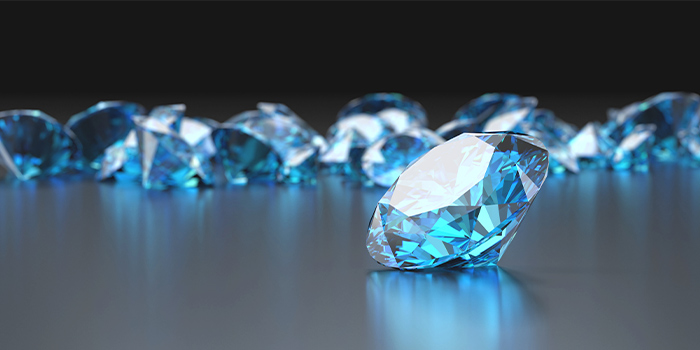
Two main methods are used. High Pressure High Temperature and Chemical Vapor Deposition. Both produce diamonds that match mined stones at the atomic level.
If you place a lab diamond next to a mined one, you cannot tell them apart with the naked eye. Even trained professionals need specialized tools to identify origin.
Example
A one carat lab diamond and a one carat mined diamond can share the same cut grade, clarity grade, and color grade. Light performance can be identical.
Why Buyers Are Choosing Lab Diamonds
Most buyers do not start with ideology. They start with constraints. Budget, size, quality, and trust.
Lab diamonds remove tradeoffs that used to be unavoidable. You can choose a higher quality stone without pushing beyond what you planned to spend.
Key reasons buyers shift to lab diamonds include:
- Lower cost for the same visible quality
- Consistent supply and predictable pricing
- Reduced environmental impact compared to mining
- Clear documentation and traceability
These are not abstract benefits. They affect what ends up on your hand.
Cost and Value What You Are Really Paying For
Price is the first practical difference you notice. Lab diamonds often cost less than mined diamonds of comparable quality. The gap can be significant depending on size and grade.
This does not mean they are cheap or inferior. It means production costs are lower and supply is controlled.
Value depends on your goal. If your goal is beauty and durability, lab diamonds deliver the same outcome. If your goal is rarity tied to geological history, mined diamonds serve that preference.
Ask yourself what you are paying for.
Example
If your budget allows a one carat mined diamond with visible inclusions, the same budget may allow a larger lab diamond with higher clarity.
Understanding Quality Without Getting Lost
The four Cs apply equally to lab and mined diamonds. Cut, color, clarity, and carat.
Cut matters most. It controls how light moves through the stone. A well cut diamond looks brighter than a larger poorly cut one.
Color measures how colorless the stone appears. Lower letters mean less color.
Clarity measures internal and surface features. Many inclusions are invisible once set.
Carat measures weight not size alone.
When you buy lab diamonds, focus first on cut, then balance color and clarity based on what you can see without magnification.
Certification Is Not Optional
Always choose a diamond graded by a respected lab. IGI and GIA both issue reports for lab diamonds.
The report confirms that the stone is a lab diamond and documents its quality. It protects you from misrepresentation.
You should be able to view the report number and match it to the stone.
Ethics and Environmental Impact in Practical Terms
Lab diamonds reduce the need for large scale mining. This lowers land disruption and resource use.
They also avoid supply chain issues linked to conflict regions. For many buyers, this matters. For others, it is simply reassurance.
What matters is transparency. You should know where your diamond came from and how it was produced.
Lab diamonds make that easier to verify.
Where Mistakes Commonly Happen
Most mistakes are not about the diamond itself. They are about assumptions.
Common issues include:
- Paying for grades you cannot see
- Ignoring cut quality to chase carat weight
- Skipping certification to save money
- Confusing resale value with personal value
Lab diamonds do not fix poor buying decisions. You still need to choose carefully.
How to Choose the Right Lab Diamond for You
Start with purpose. Is this for daily wear, an engagement ring, or a special event.
Set a firm budget. Decide what matters most within that limit.
View stones in real lighting if possible. If buying online, use high resolution videos and return policies.
When you are ready to buy lab diamonds, treat the process like any other major purchase. Slow down and verify details.
Example
If durability matters, prioritize cut and setting design over maximum size.
Ownership and Long Term Considerations
Lab diamonds are as durable as mined diamonds. They rate the same on the hardness scale.
Maintenance is identical. Cleaning, inspection, and care follow the same rules.
Resale value is different. Lab diamonds do not follow the same resale patterns as mined diamonds. If resale is important to you, factor that in.
If long term enjoyment matters more, this difference may not affect you.
Common Myths That Create Confusion
One myth is that lab diamonds are fake. They are not.
Another is that they look different over time. They do not change.
A third is that they have no value. Value depends on what you value.
Clear information replaces these myths with facts.
Frequently Asked Questions
Are lab diamonds real diamonds?
Yes. They share the same physical and chemical properties as mined diamonds. The only difference is how they are formed.
Can you tell a lab diamond from a mined one?
Not by sight alone. Specialized equipment is required to identify origin.
Is it safe to buy lab diamonds online?
Yes if the seller provides certification, detailed visuals, and a clear return policy.